Over the past few years, India's food market has witnessed several changes that are influencing the way people eat and think about food.
Over the past few years, India's food market has witnessed several changes that are influencing the way people eat and think about food. From low-fat products and organic foods to millet-based products, different food trends have gained popularity. However, one word that has become increasingly common across food categories is protein.

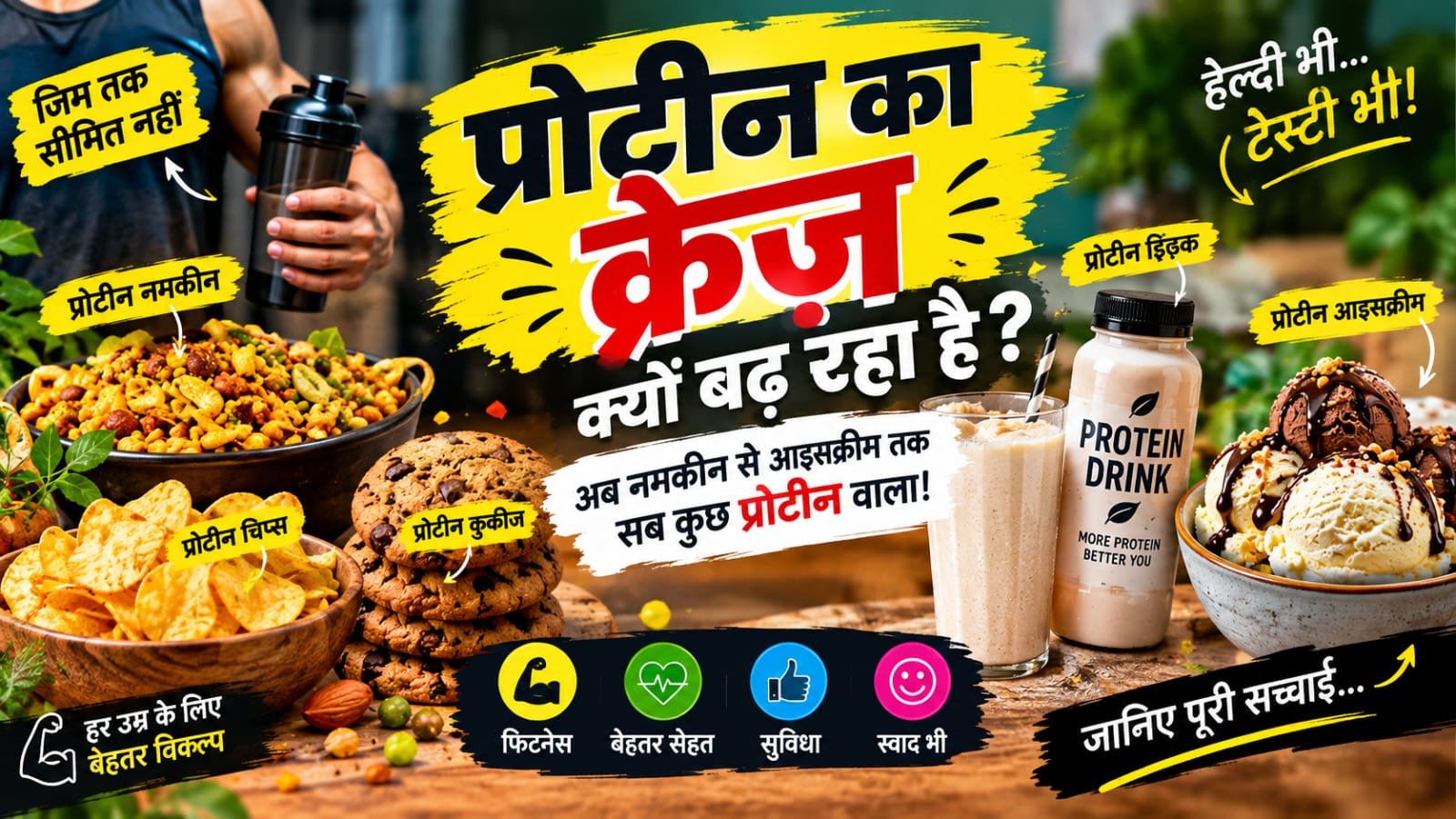
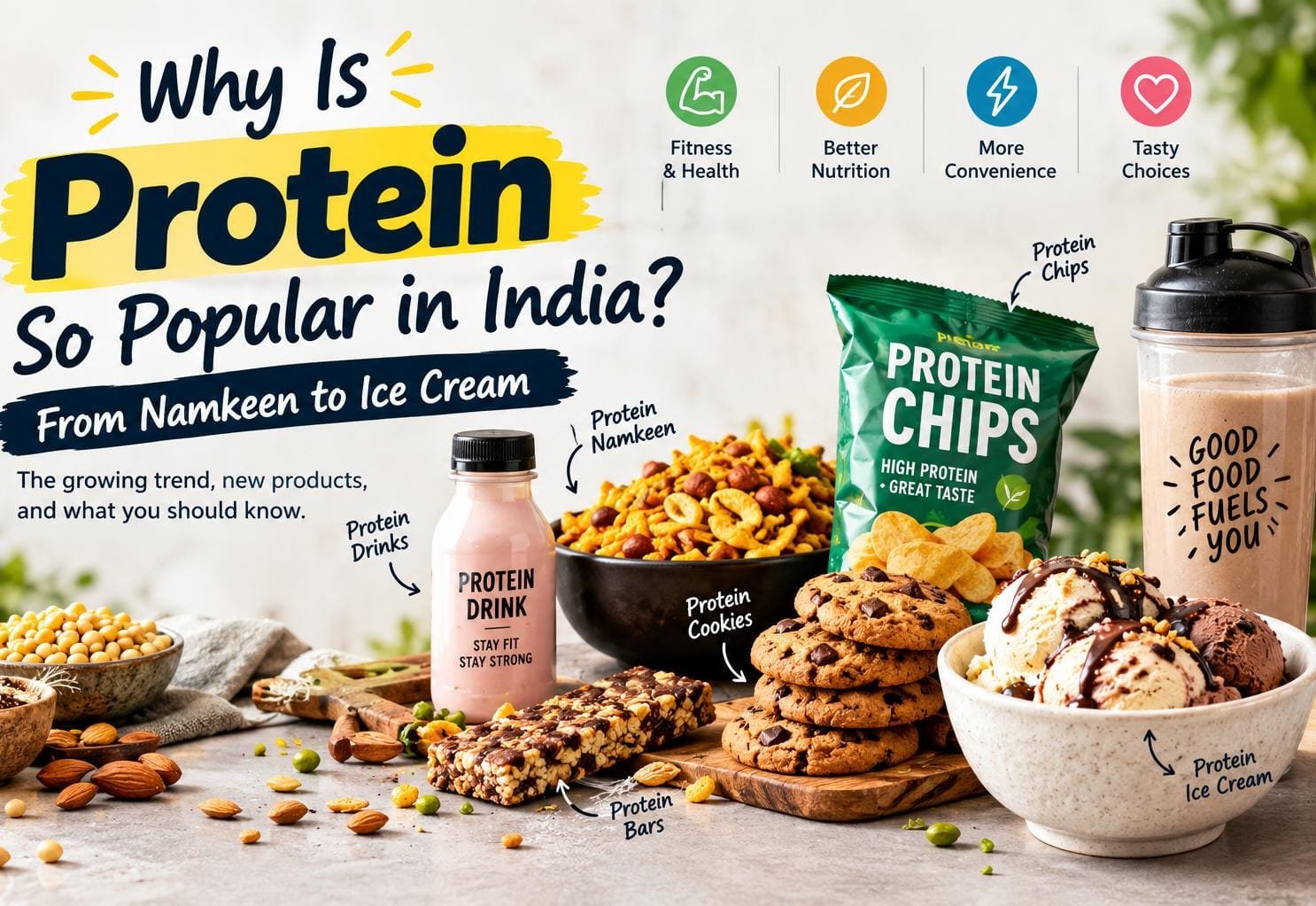
Today, if you walk through a supermarket, browse an online grocery platform, or explore food products online, you are likely to find much more than traditional protein shakes and supplements. Protein bars, protein chips, protein cookies, protein namkeen, protein drinks and even protein ice cream are becoming increasingly visible in the market.

There was a time when protein was mainly associated with gym-goers, athletes and bodybuilders. Today, that perception is changing. More consumers are becoming interested in their daily protein intake and looking for convenient ways to include protein in their regular diet.

So, why has protein moved from fitness supplements to everyday snacks and desserts? And does every product labelled “high protein” actually qualify as a healthy choice? Let's take a closer look.
Why Is Protein So Important?
Protein is one of the essential macronutrients required by the human body. It plays an important role in several bodily functions and is involved in the building and maintenance of muscles, tissues, enzymes and other components of the body.

This is why getting adequate protein is generally considered an important part of a balanced diet. However, the amount of protein an individual needs can vary depending on factors such as age, body size, physical activity, lifestyle and overall dietary pattern.

For many years, conversations around protein in India were largely focused on traditional foods such as lentils, milk, paneer, eggs, meat, fish, soy and other protein-containing foods.

Today, the packaged food industry has also recognised the growing interest in protein and is introducing new products across multiple categories.
How Protein Moved Beyond the Gym
One of the major reasons behind the growing popularity of protein is the expansion of fitness and wellness culture.
Social media platforms are filled with fitness creators, workout videos and nutrition-related content. This has encouraged many consumers to pay more attention to what they eat.
People are increasingly looking beyond taste and asking questions about nutritional value as well. They want to know how much protein, sugar, fat and calories a product contains.
This change in consumer behaviour has also influenced food companies.
Instead of limiting protein-focused products to supplements and shakes, brands are now trying to incorporate protein into familiar foods that consumers already enjoy.
That is one of the reasons protein has entered categories such as snacks, beverages and desserts.
Why Is Protein Namkeen Becoming Popular?

Namkeen is one of India's most popular snack categories. Different regions of the country have their own varieties of savoury snacks, making namkeen a familiar part of Indian food culture.
The protein trend is now entering this familiar category as well.
Some brands are using ingredients such as roasted pulses, peas, soy, nuts and seeds to create snacks that are positioned as protein-rich alternatives to traditional snacks.
The appeal is simple: consumers do not necessarily have to completely change their eating habits. Instead, they can choose a familiar snack format that also offers a protein-focused nutritional profile.
However, there is an important point to remember.
Just because a packet says “Protein” or “High Protein” does not automatically mean that the product is healthy.
Consumers should check the nutrition label to understand the actual protein content as well as the amount of sugar, sodium, fat and total calories.
The Growing Trend of Protein Chips

Chips are among the most popular packaged snacks in India, so it is not surprising that the protein trend has entered this category as well.
Products positioned as protein-focused chips or savoury snacks are being developed to appeal to consumers who want a snack while also paying attention to nutritional content.
The target audience is no longer limited to athletes and professional fitness enthusiasts.
People who simply want to make more informed choices about their everyday snacks may also be interested in these products.
This reflects a broader change in consumer behaviour. People are increasingly looking for versions of their favourite foods that can fit into their lifestyle and dietary preferences.
Protein Cookies Are Becoming Another Option

Cookies and biscuits have been a familiar part of Indian households for decades. However, growing interest in fitness and nutrition has also influenced this category.
Today, protein cookies and high-protein biscuits are being marketed as convenient snack options.
Their appeal comes from the fact that they can be consumed easily with tea, coffee or as a quick snack during a busy day.
For consumers who are looking for more protein-focused options, these products can appear attractive.
However, the same rule applies here as well: consumers should not judge a product only by the word “protein” printed on its packaging.
It is important to check the ingredient list and nutrition information. Some products may contain added sugar, higher calories or other ingredients that should also be considered when making dietary choices.
Protein Ice Cream: A Fitness Twist to Dessert
Perhaps one of the most interesting developments in the protein trend is its entry into the dessert category.
Ice cream has traditionally been considered an indulgent food. However, some brands are now offering protein-focused ice creams and frozen desserts.
The concept is straightforward: consumers can enjoy a dessert while also getting some protein from the product.
This combination has made protein ice cream an interesting topic among fitness communities and social media users.
However, it is important not to automatically equate “protein” with “healthy.”
A dessert can contain protein and still contain sugar, calories and other ingredients. Therefore, looking at the complete nutritional profile is more useful than focusing on a single nutrient.
The Rise of Protein Drinks and Ready-to-Consume Products
Protein drinks have also become an important part of the changing food market.
Traditionally, protein drinks were mainly associated with powders that consumers mixed with milk or water to prepare a shake.
Today, ready-to-drink protein beverages are also becoming more visible.
Convenience is one possible reason behind their growing appeal.
Modern lifestyles are often busy, and many consumers prefer food and beverages that can be carried easily and consumed without much preparation.
Ready-to-drink protein beverages can fit into this lifestyle, particularly for people who spend long hours at work, travel frequently or follow fitness-oriented routines.
How Social Media Is Driving the Protein Trend
Social media has become a powerful platform for food trends.
Instagram Reels, YouTube Shorts and other short-form video platforms allow consumers to discover new food products, fitness routines and diet-related ideas within seconds.
When a new protein product becomes popular on social media, awareness about it can grow rapidly.
Fitness influencers, food creators and lifestyle content creators can also introduce new products to large audiences.
This can create a cycle:
Social Media → Awareness → Trial → Reviews → More Content → More Awareness
This is one reason why a food product can sometimes become widely known within a relatively short period.
However, popularity on social media and nutritional quality are two different things. A product becoming viral does not automatically mean that it is nutritionally better.
Are Protein Products Replacing Traditional Indian Foods?
Not necessarily.
India already has a wide variety of traditional protein sources. Lentils, chickpeas, kidney beans, soy, milk, curd, paneer, eggs, fish and meat are all part of different Indian diets.
Packaged protein products can be viewed as additional options rather than direct replacements for traditional foods.
The bigger change is that consumers are increasingly looking for a combination of nutrition and convenience.
For example, someone may eat dal and vegetables at home but choose a convenient protein-focused snack while travelling or working outside the home.
This is where packaged protein products can find their place.
Is Every High-Protein Food Healthy?
This is perhaps the most important question surrounding the current protein trend.
A product being labelled “high protein” does not automatically make it healthy.
Consumers should look at the complete nutrition label rather than focusing on a single claim.
Some of the key things to check include:
- Protein content
- Total calories
- Added sugar
- Total fat
- Saturated fat
- Sodium
- Ingredients list
- Serving size
Serving size is particularly important. Sometimes consumers look at the nutritional values on a package without considering how much of the product actually counts as one serving.
Reading the complete label can help consumers make more informed decisions.
Individual dietary requirements can also vary significantly. People with specific nutritional or medical requirements may need personalised guidance from a qualified healthcare or nutrition professional.
Why Is Protein a Major Business Opportunity for Food Brands?
The growing interest in protein is creating new opportunities for food companies.
Brands can use protein-focused positioning across multiple categories, including snacks, beverages, breakfast products and desserts.
This allows companies to take familiar food categories and adapt them to changing consumer preferences.
For example, consumers who enjoy chips may be interested in protein-focused savoury snacks. Cookie lovers may be interested in protein cookies, while dessert lovers may be curious about protein ice cream.
In this way, protein is becoming more than just a nutrient. It is also becoming part of food product innovation and marketing.
Where Could the Protein Trend Go Next?
If current consumer behaviour continues, protein-focused products could appear in even more food categories.
Breakfast cereals, breads, ready-to-eat meals, beverages and snacks are already seeing protein-focused products. In the future, companies may also experiment with protein-focused versions of traditional Indian foods.
India's diverse food culture provides plenty of opportunities for innovation.
Different regions have their own traditional dishes and ingredients, and food companies may increasingly explore ways to combine these familiar flavours with modern nutritional positioning.
The future consumer may not simply look for a “protein product.” Instead, they may look for a combination of taste, convenience and nutrition.
What Should Consumers Keep in Mind?
Consumers do not necessarily need to follow every protein trend.
The most important thing is to maintain a balanced diet and understand individual nutritional needs.
If a packaged protein product fits someone's lifestyle and dietary requirements, it can be a convenient option. However, simply choosing a product because its packaging says “high protein” may not be the best approach.
Whole foods and minimally processed foods can also play an important role in a balanced diet.
The goal should be to look at the overall nutritional value of the diet rather than focusing on a single nutrient.
Conclusion
The protein craze in India is no longer limited to gyms, athletes and bodybuilding communities.
It is gradually becoming part of everyday food culture.
From protein namkeen and protein chips to protein cookies, protein drinks and protein ice cream, the food industry is finding new ways to incorporate protein into familiar food categories.
The trend is being supported by several factors, including growing fitness awareness, social media influence, convenience and increasing interest in nutritional information.
Food companies are responding to these changing preferences by developing new products and formats.
At the same time, consumers should remember that the presence of protein does not automatically make a product healthy. Checking nutrition labels, understanding ingredients and considering individual dietary needs are important when choosing packaged foods.
The protein trend is clearly changing the way food brands think about snacks, beverages and even desserts.
Whether this trend continues to expand into more categories remains to be seen, but one thing is already clear—protein is no longer limited to the gym shaker bottle. It is increasingly finding its way onto Indian food shelves and into everyday eating habits.
Community Discussions (0)
Leave a comment or food tip
No comments yet. Be the first to share your thoughts!